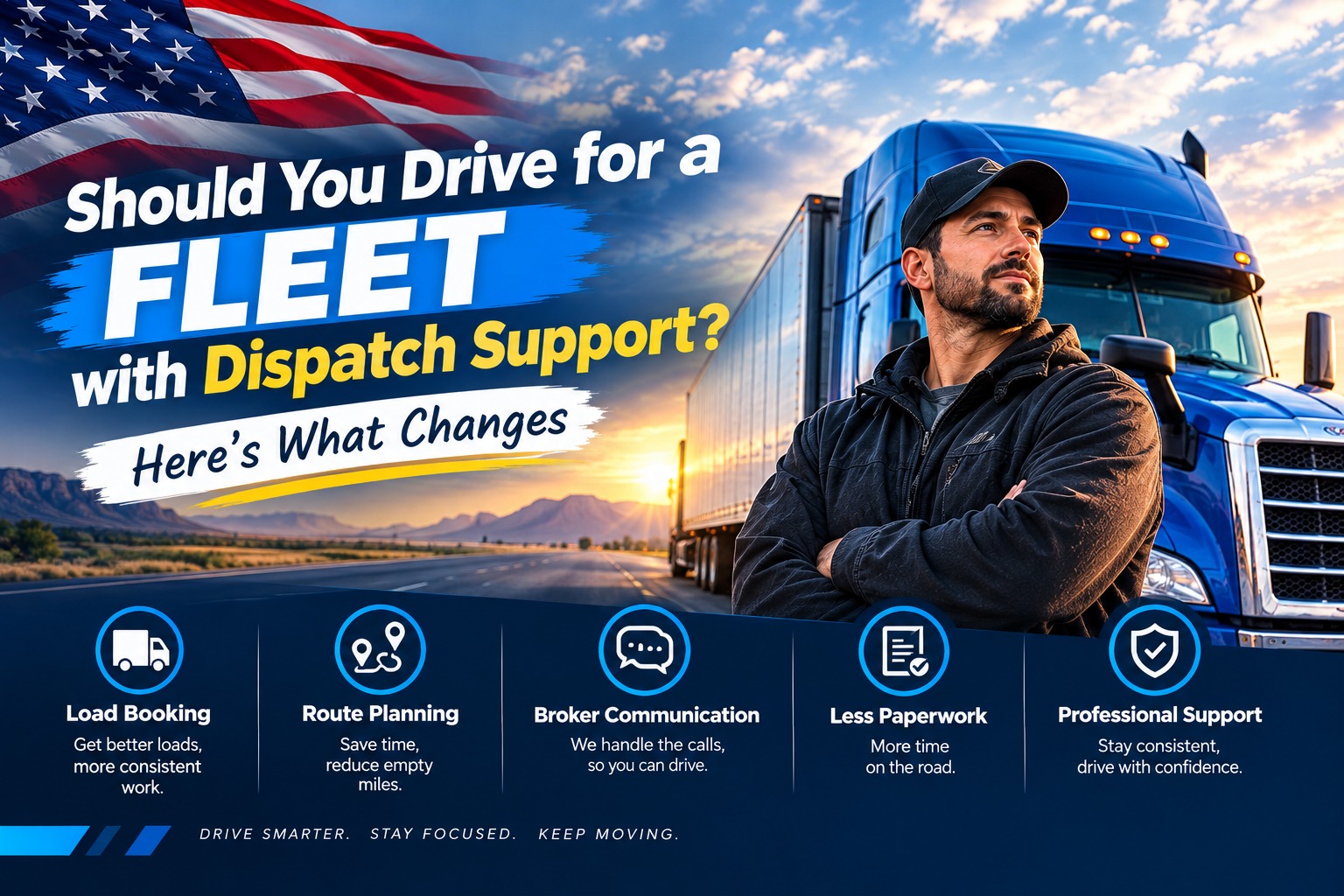
Most driver job listings look the same on paper - pay per mile, home time, equipment type. What they rarely explain is how differently your day actually runs depending on one thing: whether you have real dispatch support for drivers behind you or you're finding every load yourself. At Truck Dispatching USA, we talk to drivers every week who didn't realize how much unpaid time they spent hunting loads until someone else did it for them.
What Does "Dispatch Support" Actually Mean for a Driver?
A dispatcher isn't just someone who books your next load. Good dispatch support for drivers means someone actively searching freight boards, negotiating rates on your behalf, planning routes to minimize wasted miles, and handling the paperwork that eats into your actual driving time.
The Reality of Finding Your Own Loads
Without dispatch support, a driver typically spends hours a week scrolling load boards, calling brokers, and negotiating rates alone - time that isn't paid and doesn't move the truck forward. Many drivers accept lower rates simply because they're tired of searching and want to keep moving.
This is where the math quietly works against independent drivers. Every hour spent on the phone chasing a broker for a fair rate is an hour the truck sits still, earning nothing. Multiply that across a full year, and the unpaid admin time adds up to weeks of lost driving capacity - time that could have gone into paid miles if someone else were handling the search.
Common Mistakes Drivers Make Without Dispatch Support
Drivers going it alone tend to fall into a few predictable traps: booking the first available load instead of the best-paying one nearby, underestimating how far a "quick" backhaul actually is, and accepting broker rates without pushing back because negotiating isn't their strength or their priority. None of these are driver failures - they're simply what happens when one person is expected to drive, negotiate, plan routes, and manage paperwork at the same time.
What Changes When You Have Dispatch Support
More Time Behind the Wheel, Less Time on the Phone
When someone else is sourcing and booking freight, your time goes back into driving - which is the only part of the job that actually pays.
Fewer Deadhead Miles
Unpaid empty miles are one of the biggest silent profit killers in trucking. A dispatcher who plans routes strategically keeps deadhead miles low by lining up your next load near your drop-off point instead of leaving you stranded searching cold. If you want to see exactly how much deadhead mileage is costing you right now, run your current numbers through the deadhead calculator deadhead calculatorbefore comparing offers.
Better Rate Negotiation
Experienced dispatchers know current market rates across lanes and negotiate accordingly - something an individual driver juggling the road and the phone rarely has time to do effectively.
Who Benefits Most from Dispatch Support?
Owner-operators and small fleet drivers see the biggest impact, since they're usually the ones absorbing both the driving and the business-side workload alone. Company drivers already have this built in through their employer, but for independent operators, dispatch support for drivers is often the difference between breaking even and actually growing.
New authority holders and drivers who recently went independent tend to feel this the hardest. Building broker relationships and learning lane rates takes months; most new operators don't have the cushion for it. Dispatch support shortcuts that learning curve by putting existing broker relationships and lane knowledge to work immediately, instead of a driver rebuilding it all from scratch while trying to stay profitable in the meantime.
What to Look for Before You Apply
Not all dispatch arrangements are equal. Ask how loads are sourced, whether rate negotiation is included, how deadhead miles are handled, and whether compliance paperwork is part of the service. A dispatcher who just forwards load board listings isn't providing real dispatch support for drivers - they're just adding a middleman.
Also ask about communication style and availability. A dispatcher who's hard to reach when a load falls through or a delivery window shifts creates more stress than the arrangement is worth. The right setup should feel like having a business partner handling the back office, not another person you have to manage on top of driving.
Ready to Drive with Real Dispatch Support?
If you're tired of unpaid hours spent hunting for loads and want someone actually working the phones and the rates on your behalf, start with our New Dispatch Authority and see what a real dispatch partnership looks like.
Final Thoughts
Dispatch support for drivers isn't just a convenience; it changes how much of your week you spend earning versus searching. Fewer deadhead miles, stronger rate negotiation, and hours back in your day add up fast over a full year on the road. Before your next contract, it's worth asking whether you're driving with support or driving alone.
Frequently asked questions
What does a dispatcher actually do for a driver?
A dispatcher sources loads, negotiates rates, plans efficient routes to reduce empty miles, and often handles paperwork and compliance tasks.
Do company drivers need dispatch support?
Usually not directly - most company drivers already have dispatch built into their employer's operations. It matters most for owner-operators and independent drivers.
How much can dispatch support reduce deadhead miles?
It varies by lane and season, but strategic route planning typically cuts unpaid empty miles significantly compared to self-booking.
Is dispatch support worth the fee for owner-operators?
For most owner-operators, yes - the time saved and better rate negotiation usually outweigh the dispatch fee, especially when deadhead miles drop.
What should I ask before signing with a dispatch service?
Ask how loads are sourced, whether rate negotiation is included, how they handle deadhead miles, and what paperwork support comes with the service.
Want this handled for you?
We dispatch owner-operators from 6% of gross or $300 a week, and file new authority for a flat $649 plus government fees at cost. No contracts either way.
Keep reading
Power Only Loads: Where to Find Them, What They Pay, and What to Check Before You Hook
Where to find power-only loads, how to check if a load pays using your own cost per mile, and what a trailer i
GuideHow Long Is Truck Dispatcher Training? (Free 9-Hour Course vs Paid Programs)
How long is truck dispatcher training? Compare free vs paid courses and see real timelines before you spend a
RatesSemi-Truck Valuation Tool: Know Your Truck's Real Worth (2026)
Wondering what your semi-truck is actually worth? Our free AI valuation tool gives you an instant market range